

Oklahoma is one of only 14 states where trucks towing three trailers the length of a Boeing 737 are allowed to travel.
Triple trailers are banned in other states. They are allowed in Arizona, Colorado, Idaho, Kansas, Montana, Nebraska, Nevada, North Dakota, Oklahoma, Oregon, South Dakota, or Utah where there is more wide open spaces on the highways. Two other states, Indiana and Ohio allow them but only on specific turnpikes where the lanes are wider and there are fewer exits, according to a report by Jalopnik.
In 1975 when the Utah Transportation Commission adopted a pilot program to allow triple trailers on certain Utah highways there was criticism over the rigs for being too big and fraught with possible dangers, according to a 1997 report by the Deseret News.
After the test period was over, the commission adopted a plan that allowed triples on some Utah highways and to run under certain conditions, making the rigs the most regulated vehicles running on Utah roads. In the intervening period, triples have come under close scrutiny and still are the subject of criticism from some organizations.
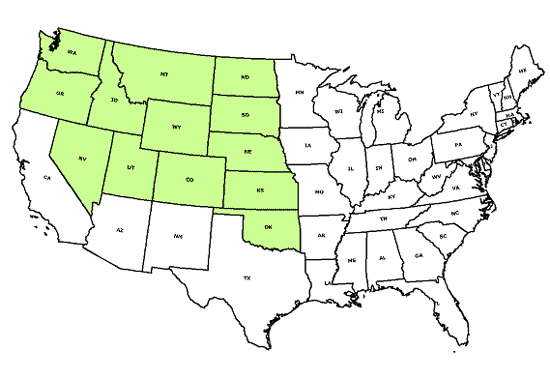
Three-trailer trucks are seen on Interstates 40 and 35 in Oklahoma but the federal government limits trucks on the National Network to two trailers or doubles in most other states. When the Intermodal Surface Transportation Efficiency Act (ISTEA) was enacted in 1991, it included a grandfather clause allowing Oklahoma and other states that already permitted triples to keep them.
The LCV or long combination vehicles freeze imposed by the ISTEA of 1991 responded to public concerns regarding the safety of LCVs as well as concerns regarding rail competitiveness. This freeze prevents the States from changing the weights, lengths, and routes of LCVs. For purposes of the freeze, LCVs are defined as commercial motor vehicles having two or more cargo units and gross weights above 80,000 pounds.
The North American Council for Freight Efficiency explained that the triple and double trailer combinations are also referred to as “longer combination vehicles” and are favored because they can allow for more payload to be moved per gallon of fuel consumed.
“Given the dramatic improvement in aerodynamic drag and lower rolling resistance of tires, today’s tractors have plenty of power to pull the resulting heavier and longer loads. A dolly and appropriate electrical and air equipment are required to attach one trailer to another,” according to the Council.
“Double or triple trailers can be dropped at a location and picked up by a different tractor, improving logistics flexibility but requiring more management of the trailers and the dollies required to pull the second trailer. In addition, they cannot be used nationwide, since only some states permit their use.”
There are inherent risks with the triple trailers on the highways and one involves the issue of increased stopping distance.
As Amazon recently reported, the capacity of a triple-trailer vehicle is immense. They can weigh as much as 105,500 pounds once fully loaded. The capacity of the vehicle determines its the distance to stop. In the event of an emergency it is likely that a triple-trailer vehicle will require a greater distance to come to a complete stop compared to regular vehicles or even single-trailer trucks. This poses a significant risk, particularly in heavy traffic circumstances.

